
SOURCE: Story produced by author Nicole Brown and published in the National Indigenous Times: Hybrid economic futures: building real economies on... | National Indigenous Times
At the Great North Conference on Larrakia Country, the late-afternoon panel on hybrid economic futures carried heart and honesty.
Facilitator Cissy Gore-Birch, a respected leader, advocate for Country and Co-Chair of the Indigenous Carbon Industry Network, guided the conversation with warmth, drawing out the stories and insights of Barry Hunter, Chief Executive Officer of the North Australian Indigenous Land and Sea Management Alliance, and Dr Dean Yibarbuk, senior Arnhem Land leader, founder of Warddeken Land Management and Co-Chair of the Indigenous Carbon Industry Network.
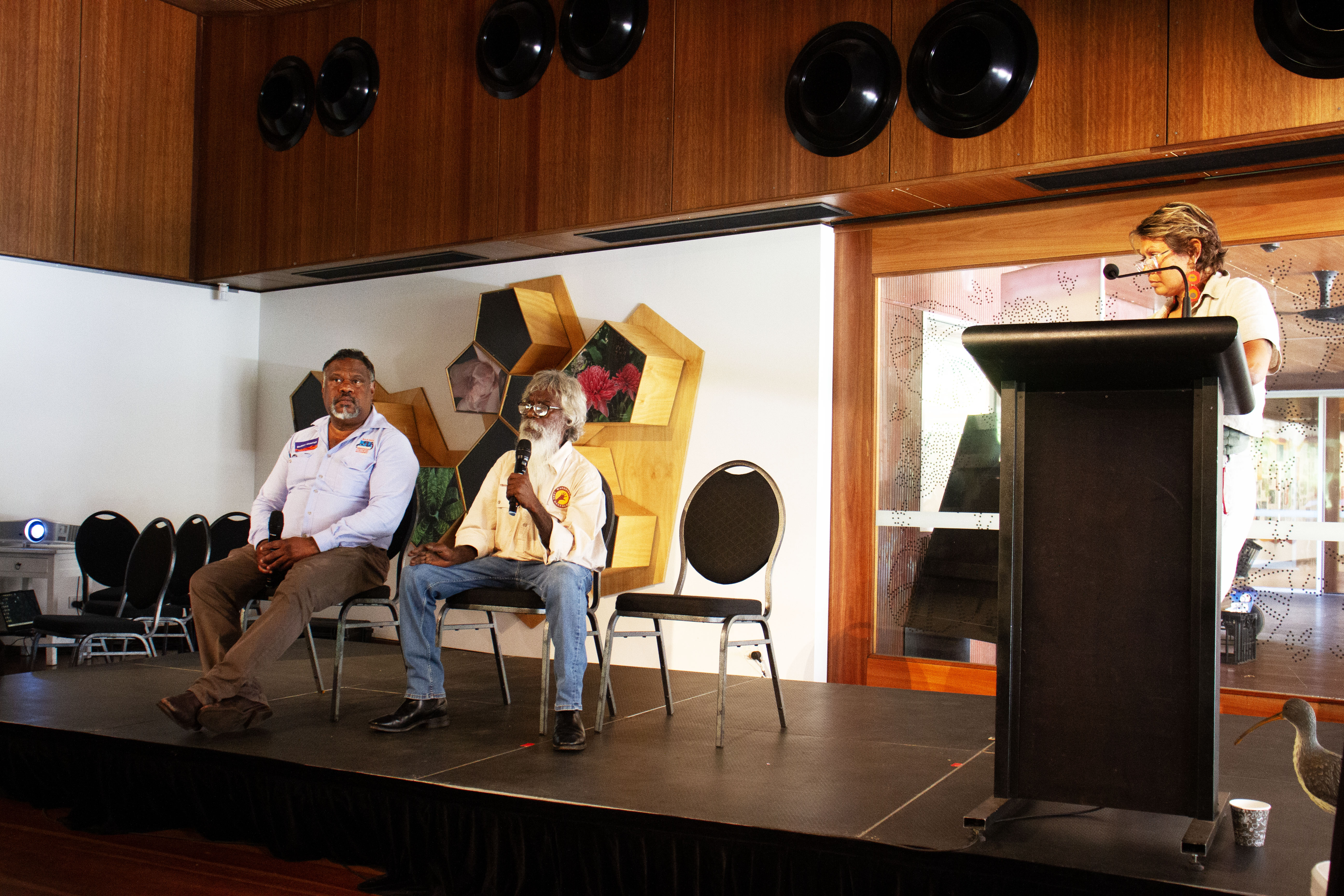
The discussion began with history. Dr Yibarbuk recalled the years when feral animals, invasive weeds and uncontrolled fires tore through Country.
The damage was obvious, but so was the solution — bringing people home. He spoke of the first land and sea management programs in Maningrida, where young and old returned to fire, ceremony, language and law.
"We are not burning for money," he said. "We are doing this for our animals, for cultural reasons, and to train our young ones. They need to be strong in both worlds."
Those early steps grew into something bigger. Dr Yibarbuk described how bush universities were created in communities, places where cultural learning sat alongside Western education. Children were taught songs, stories and ceremony at the same time as they learnt modern skills in science and land management. It was a way of ensuring the next generation could thrive in both systems while staying firmly grounded in their identity.
From this foundation came one of the most powerful examples of a hybrid economy: the use of traditional fire knowledge in carbon abatement.
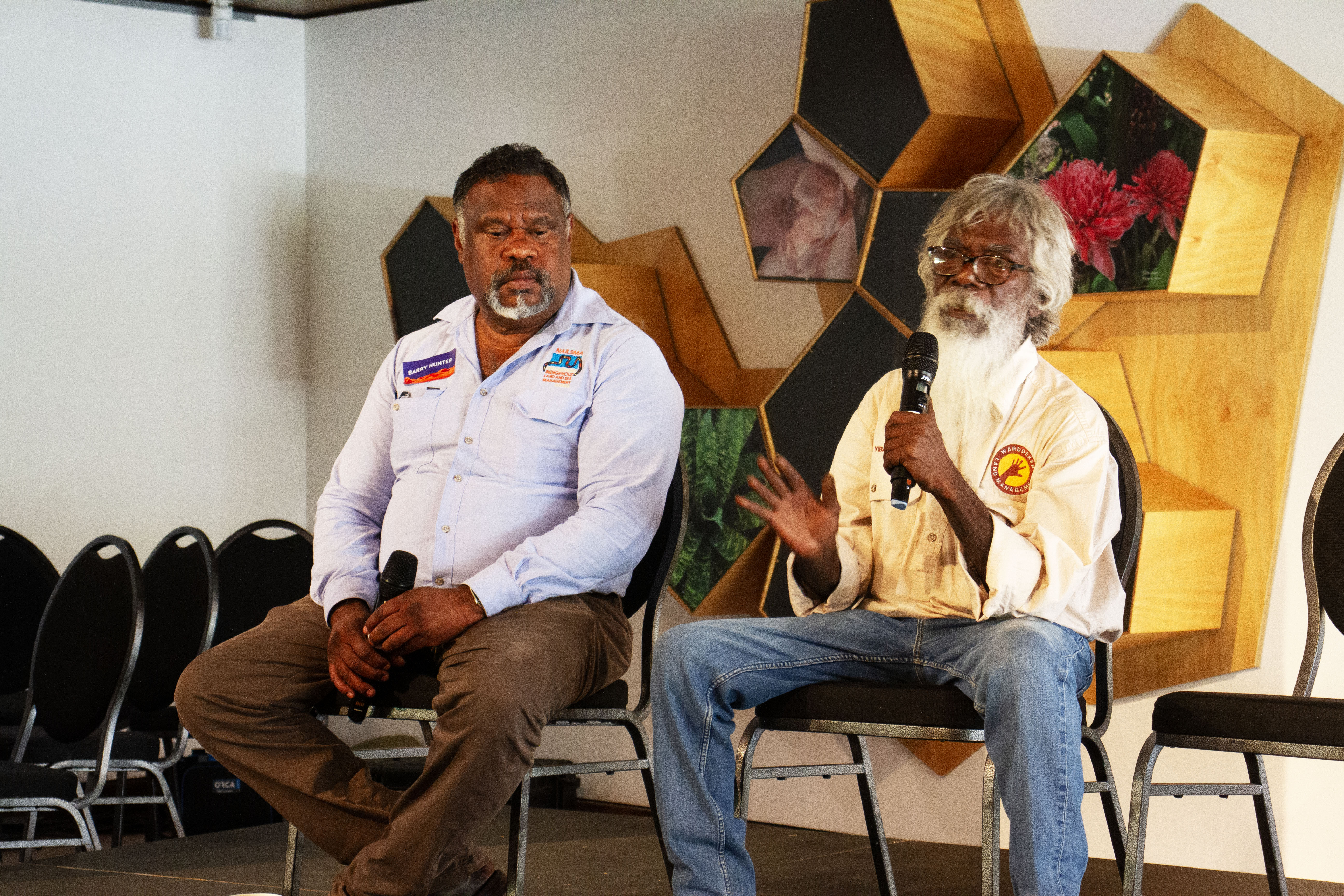
Mr Hunter explained how early-season cool burns prevent destructive wildfires later in the year, dramatically reducing emissions.
"When the idea first came up, people thought it was bizarre," he said. "Now it is one of the main tools Australia relies on."
For him, success lies not just in science but in keeping cultural authority at the centre.
"Good data is one thing, good cultural data is another. Both matter," he said.
The conversation then shifted to ranger jobs, which have become a symbol of pride and opportunity across the north. Seeing young people in uniforms working on Country has inspired entire communities, yet the system remains uneven. Mr Hunter said government commitments to expand ranger numbers often focus on entry-level roles without building pathways to leadership.
"We need succession planning, mentoring and proper roles so our young people can step into management," Mr Hunter said.
He described the constant pressure on rangers, expected to cover tourism, disaster response and compliance.
"At their core, rangers are about cultural and natural resource management," he said. "Fund that properly and the benefits will flow."
The economic picture is still unequal. More non-Indigenous pastoralists are registered for carbon projects than Aboriginal groups, and a similar pattern exists in bush foods. Communities produce the raw product but miss out further along the value chain. Dr Yibarbuk said syoung rangers are already combining helicopters and GPS technology with fire sticks and ceremony.
The innovation is there, but long-term investment is needed for communities to control and grow these industries themselves. Audience questions turned to resourcing, with Ms Gore-Birch saying if NGOs are funded to work on Country, some of that support must flow to the Indigenous organisations already leading the way. She said communities are already reinvesting their own carbon revenue into roads, equipment and training because governments have not delivered. That reinvestment is building capability from the ground up.
Toward the end, Ms Gore-Birch offered a bold idea. Australia has produced countless white papers on northern development, but perhaps it is time for a black paper—a plan led by Aboriginal leaders that maps out what economic futures look like when built from Country up. Such a vision would measure success in both livelihoods and cultural wellbeing, ensuring that strong economies are also strong in culture.Mr Hunter supported the call, saying it is time to shift the narrative from deficits to strengths and that communities already hold the knowledge, capability and vision to drive change.
Dr Yibarbuk closed with words that left the room quiet.
"Our practices will not stop. We will keep training our children in culture, so they can lead, so they can look after Country. That is the future we want," he said.
The session ended with a clear message — hybrid economies are not waiting on the horizon, they are here. They are being shaped by leaders such as Barry Hunter, carried forward by young rangers under the guidance of trailblazers such as Dr Dean Yibarbuk, and strengthened by the voices of people like Cissy Gore-Birch.
The challenge now is ensuring resources, respect and recognition flow to where they belong, back to the people who have always known how to care for Country.
SOURCE: Story produced by author Nicole Brown and published in the National Indigenous Times: Hybrid economic futures: building real economies on... | National Indigenous Times