
Indigenous-led carbon projects were presented as a proven Aboriginal led remote economic development strategy at the 2026 Developing the North conference in Mparntwe (Alice Springs), with projects already delivering multiple benefits across northern Australia.
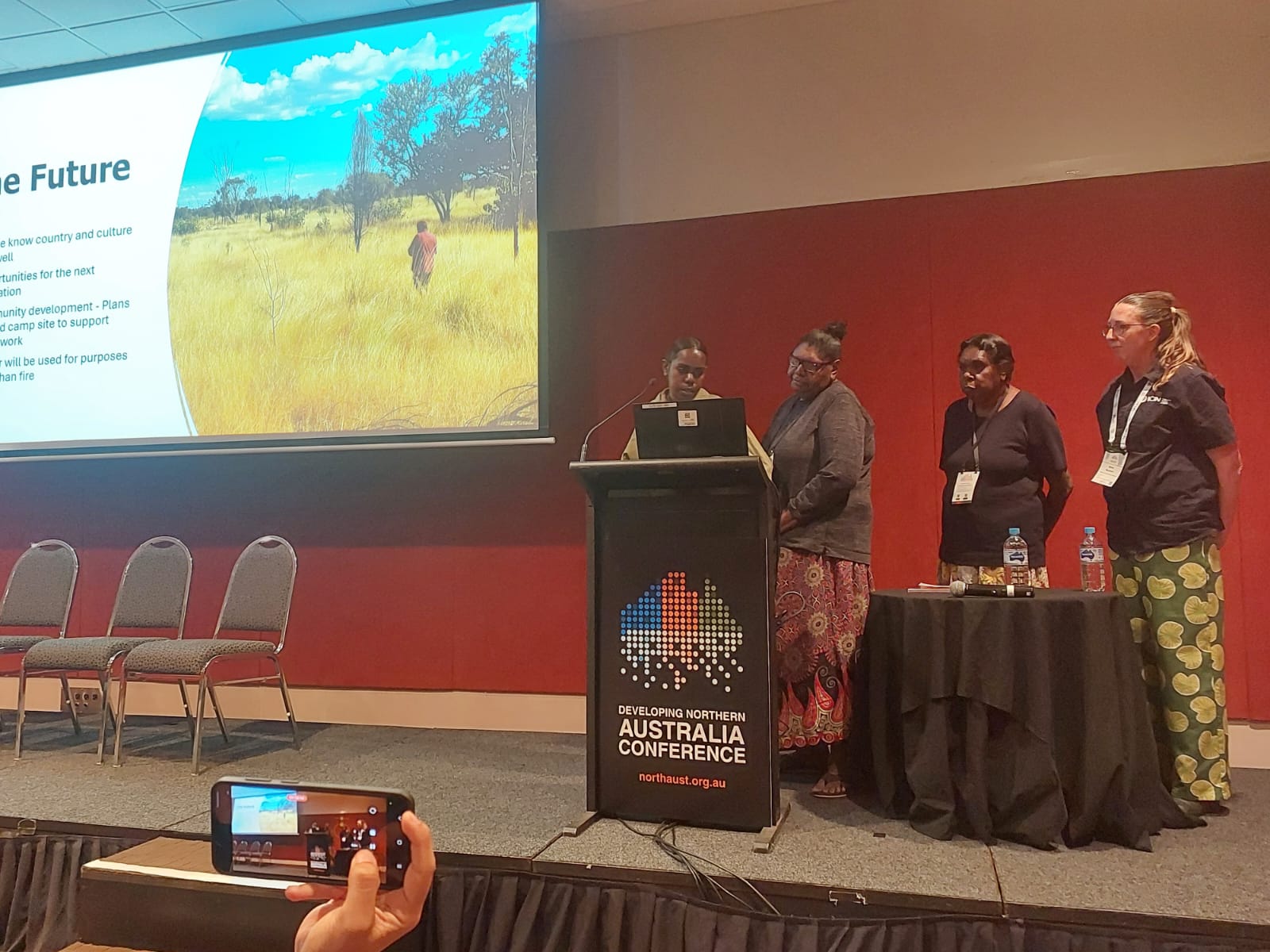
In the session, Indigenous Led Carbon Projects Delivering Significant Benefits for Climate, Country and Community, held on Thursday 6 August at the conference, Anna Boustead, CEO of the Indigenous Carbon Industry Network (ICIN), outlined how Indigenous-owned carbon projects are creating jobs, strengthening cultural land management and supporting climate action, while arguing that environment and climate must be central to all development strategy and planning.
Real, impactful development which improves livelihoods doesn’t come from politicians cutting ribbons in cities; it comes from projects run by people in remote areas who live in, care for and make decisions about these places,” said Anna Boustead, who shared the stage with Mudburra Traditional Owners.
Mudburra Traditional Owners Janey Dixon, Gail Sandy and Aleeta Dixon spoke about the benefits of their Savanna Fire Management (SFM) carbon project, which has been operating for 10 years, is the first carbon project in Central Australia and is owned and run by Jinkaji Aboriginal Corporation in partnership with the Central Land Council (CLC).
Travelling about eight hours to Mparntwe to share the stage with ICIN, Janey, Gail and Aleeta described how their carbon project is changing their Country, supporting their community, strengthening ranger work and generating carbon revenue for priorities decided by Jinkaji.
Gail Sandy explained how early dry season cool burns are improving biodiversity on their Country, with bilbies, echidnas and quails now much more commonly seen. She also shared their burning routine, which involves day and night burns, with night burns preferred because the wind is low, with the rangers bringing large groups from their community along to help.
I saw Janey working as a ranger, and I wanted to be one too. I love being out on Country, and this SFM project brings us all out there,” said Gail.
Janey is involved in governance, supports the relationship with the CLC and works with Jinkaji on decisions around how the carbon money is used.
From the beginning, we set up a good relationship with the CLC. We run the project, and the CLC support us with administration, auditing and other tasks,” said Janey.
We are able to use the carbon money to pay salaries of Indigenous rangers who are working on the project, training, weed management, annual bilby surveys, equipment like clothing and drip torches, and we are now starting to build a structure out on our land. We make all of the decisions, as a board, about where the money goes,” said Janey.
Jinkaji is the Country of Aleeta’s grandmother, and caring for it through the carbon project makes her proud.
I’m trying to get a lot of other young female rangers to get involved in this carbon project. I feel really proud to be connected to my grandmother’s Country,” she says.
The Indigenous carbon industry is made up of 41 Indigenous owned and run carbon projects in total, including 35 Indigenous-owned and operated savanna fire management (SFM) projects. These projects enable improved Indigenous fire management to over 24 million ha’s of north Australian savanna and abate around 1 million tonnes a year on average, or >12 million tonnes of emissions since 2012.
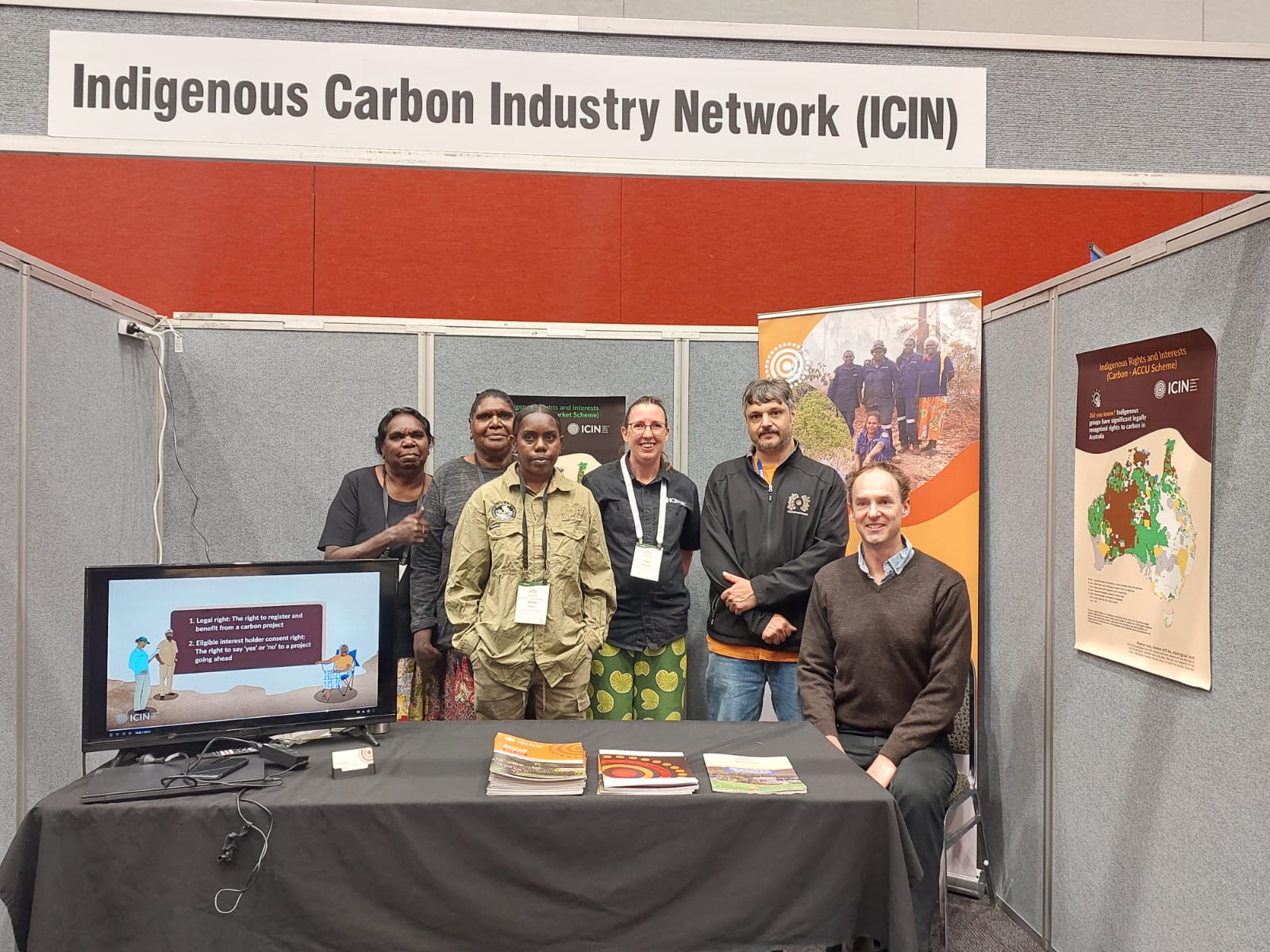
ICIN thanks Janey, Gail and Aleeta for travelling to Mparntwe to share their story, as well as the Central Land Council for their support in making this possible. Their leadership shows why the Indigenous carbon industry must be recognised as a major northern development opportunity, one that delivers multiple benefits and keeps decision-making in the hands of Traditional Owners and Indigenous communities.

ICIN also thanks the Australian Government’s Department of Climate Change, Energy, the Environment and Water (DCCEEW) for their funding support through the First Nations Carbon Farming Outreach Program which supporting this program of work.