


In May 2026, the Indigenous Carbon Industry Network (ICIN) held a series of engagements in Boorloo, Perth, Western Australia, connecting with, and growing, our membership, reaching Indigenous organisations and land managers with information about carbon farming and advocating for further opportunities for Indigenous-led carbon with researchers, corporates and government.
The week began with a workshop delivered as part of the Carbon Farming Outreach Program, on Monday 18th May, 2026. Whadjuk and Balladong Noongar Elder Freda Ogilvie (pictured, below) welcomed us to her Country, sharing her love of education as ICIN staff prepared to deliver educational resources on climate change, carbon markets, the Australian Carbon Credit Unit (ACCU) Scheme and Indigenous rights and interests in carbon. In attendance was Indigenous people and non-Indigenous people who work at Indigenous organisations, including from the Western Australian Rangelands Indigenous Carbon Network, Ngadju Native Title Aboriginal Corporation and Wilinggin Aboriginal Corporation. The purpose of the workshop was to support Indigenous people to present on these complex topics to their communities, with 86% of attendees reporting in the evaluation that the resources presented were useful for delivering training to Indigenous people. If you would like a carbon farming workshop in your community, fill out the EOI form on ICIN’s website. 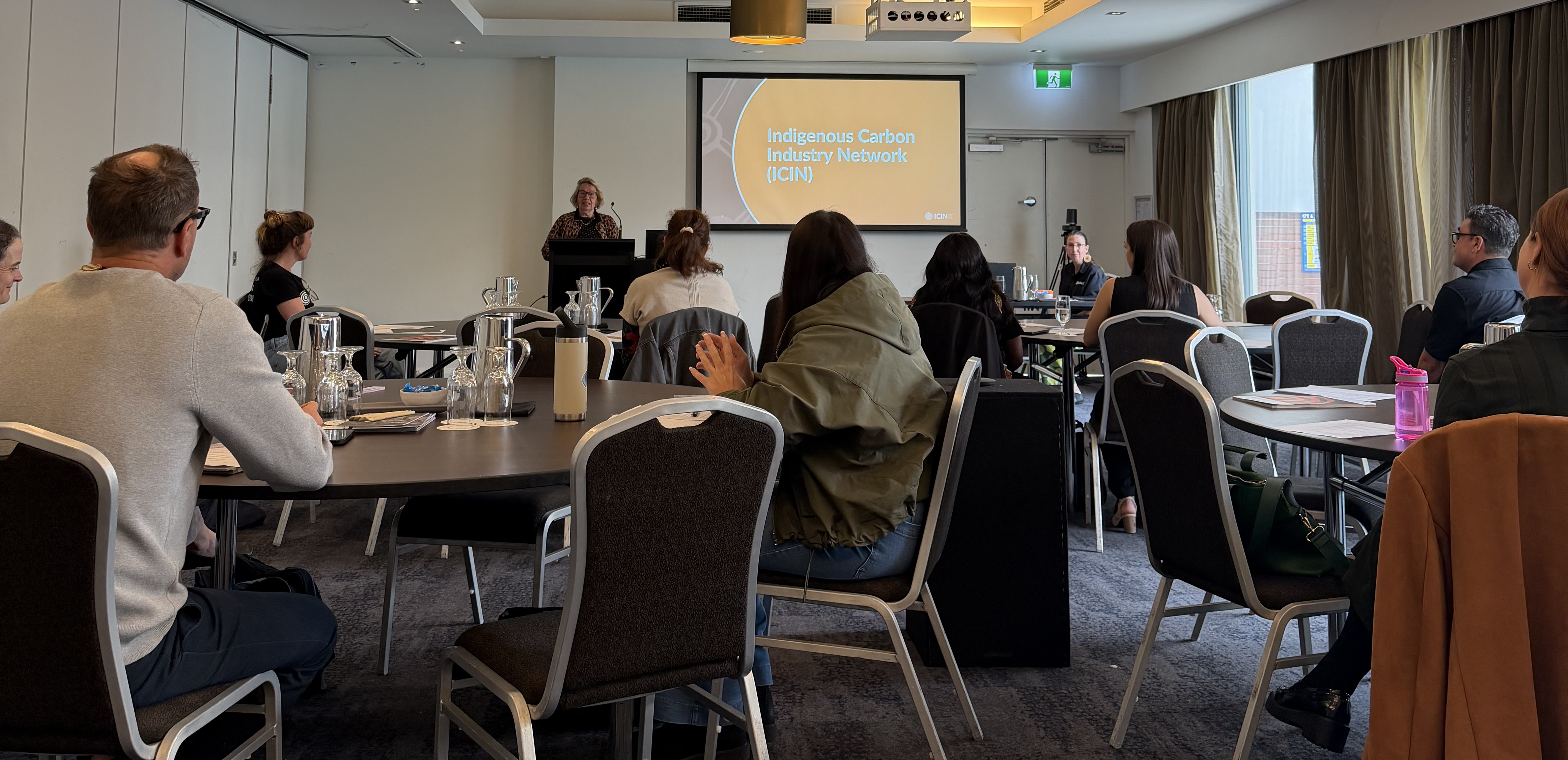
Photo caption: Boorloo workshop
At the 10th Carbon Farming Industry Forum, organised by the Carbon Market Institute, on Wednesday 20th and Thursday 21st May, ICIN Directors and staff advocated for increased opportunities for Indigenous people in carbon at plenary sessions, in speeches and at workshops.
On day one, Sarah Parriman, Director ICIN, alongside Suzanne Thompson, Director ICIN, and Dr Dean Yibarbuk, Co-Chair ICIN, delivered a statement to the forum, with Sarah also moderating the following session titled 'Indigenous Carbon – Country, Culture and Community'.
See a snippet of Sarah's speech here.
While the carbon market is still in its early stages, the premium and benefits for Indigenous carbon - highlight its broad potential. We urge the Australian Government to resource Indigenous leadership, prioritise Indigenous-led methods and set realistic timeframes for method development so that Indigenous land managers can inform method design.
It is critical that the entire carbon market – including corporate investors, carbon developers and other land managers such as yourselves - support the Indigenous carbon industry. This includes investing in Traditional Owner groups on the ground as true partners and stepping aside where needed to allow Indigenous communities without legal right to own a project," said Sarah Parriman in her speech.
Find Sarah's full speech below:
Later that afternoon, Suzanne Thompson spoke on the panel titled 'Strengthening Market Architecture for Business and Investor Confidence' raising the 'additionality barrier' as something to address and change, and Anna Boustead, CEO ICIN was a part of the panel titled 'Method Gaps and Integration'.
A core requirement of carbon markets is that credits are only issued for climate action that would not have happened otherwise. This creates a perverse outcome where land degraded by past western practices is rewarded for restoration, while healthy, intact Country meticulously maintained by Indigenous custodians for millennia is often excluded from the market because it lacks a degraded baseline,” said Suzanne Thompson in her panel session.
The following day, Dr Dean Yibarbuk presented in the panel titled 'Delivering Resilience and Adaptation Through Carbon and Nature', showcasing long-term biodiversity monitoring being undertaken in the Warddeken Indigenous Protected Area (IPA). This project is designed to inform fire management in the context of a changing landscape.
Dr Yibarbuk explained that since 2017, Warddeken has monitored 120 sites across its IPA, consulting with traditional owners every year, with the project now in its 10th year of collecting data. The project was started as rangers noticed mayh (native animals) disappearing and were interested to understand how it was related to wrong way fire and wildfires. Findings from the project include the importance of giving Country a break from fires - waiting three or four years for the right time for a cool burn - and that cameras are one way to monitor Country but being out on Country and using your own eyes is also important.
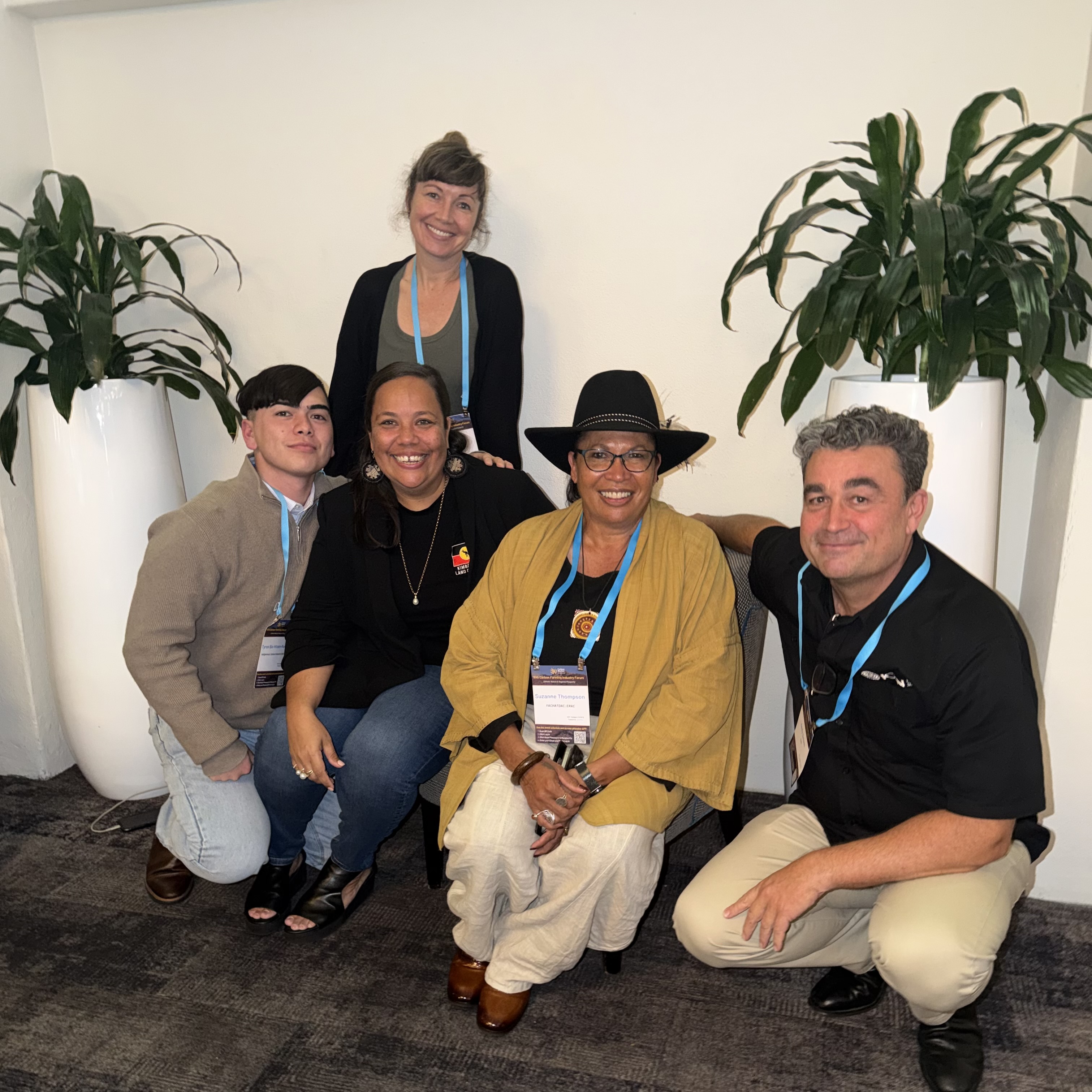
Photo caption (L-R): Tyron Bin Hitam-Keeffe, Sarah Parriman, Clare Price, Suzanne Thompson and Jady Smith at the Carbon Farming Industry Forum.
On Friday 22nd May, ICIN held its 20th ICIN Board meeting at Associate Member Indigenous Desert Alliance's (IDA) office in Boorloo. The full agenda included the strategic review, finance and employment updates as well as presentations from IDA's CEO Sam Murray and Professor Stephen van Leewen from Curtin University.
At the Board meeting, Directors welcomed two new members to ICIN:
- Kullilli-Bulloo River Aboriginal Corporation RNTPBC, who were an Associate member, but now own their own HIR carbon project, therefore are eligible to be a Full Member and
- Ngadju Native Title Aboriginal Corporation, as ICIN's newest Associate Member

Photo caption: Sarah Parriman, Anna Boustead, Dr Dean Yibarbuk and Suzanne Thompson at the 20th ICIN Board meeting.