
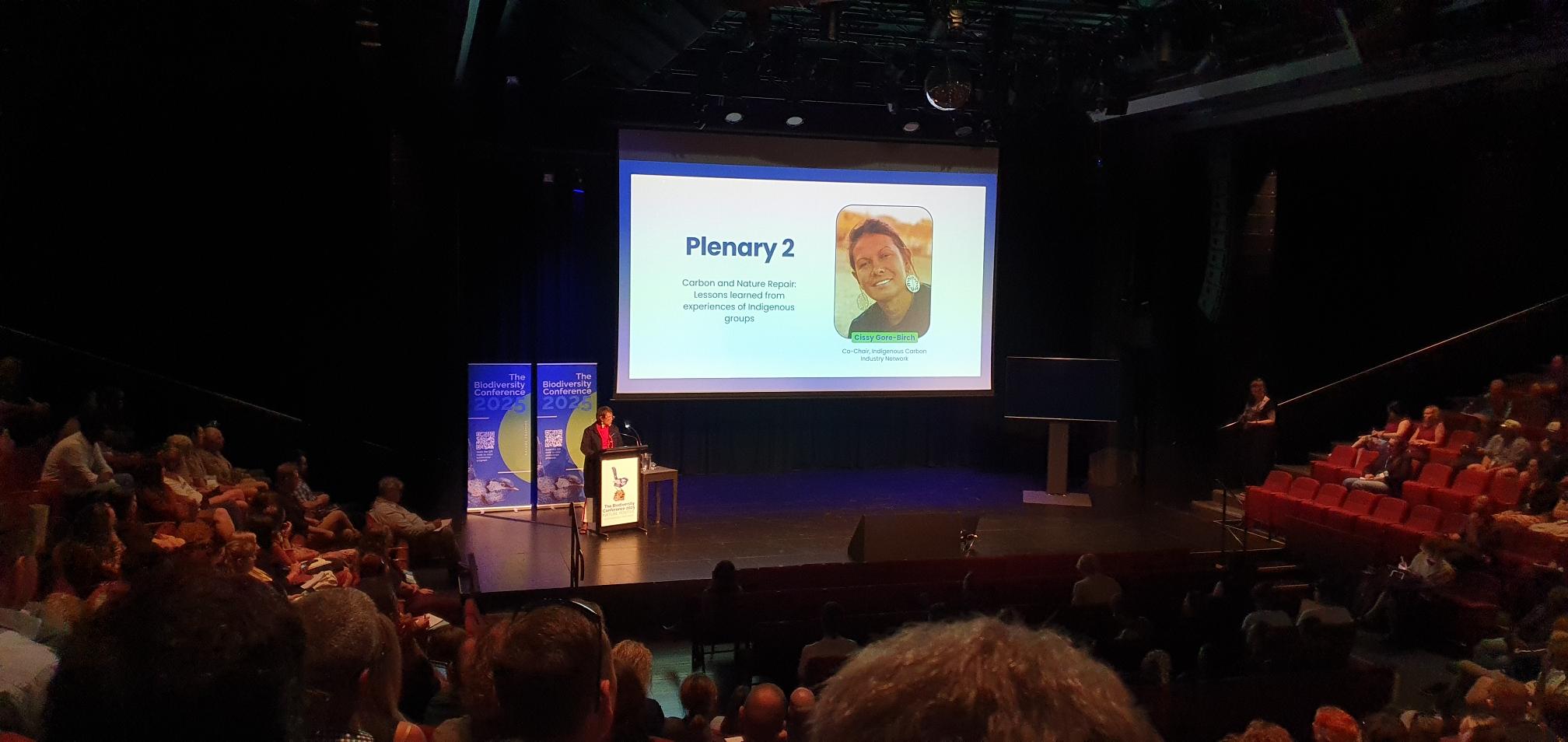
On 28 October, Cissy Gore-Birch OAM, Co-Chair of the Indigenous Carbon Industry Network (ICIN) gave a keynote presentation at The Biodiversity Conference 2025 NATURE POSITIVE, held in Perth, WA.
Cissy's speech, titled 'Learnings from the Carbon Market relevant to Nature Repair', was delivered to 1200 people at the conference venue the University Club of Western Australia.
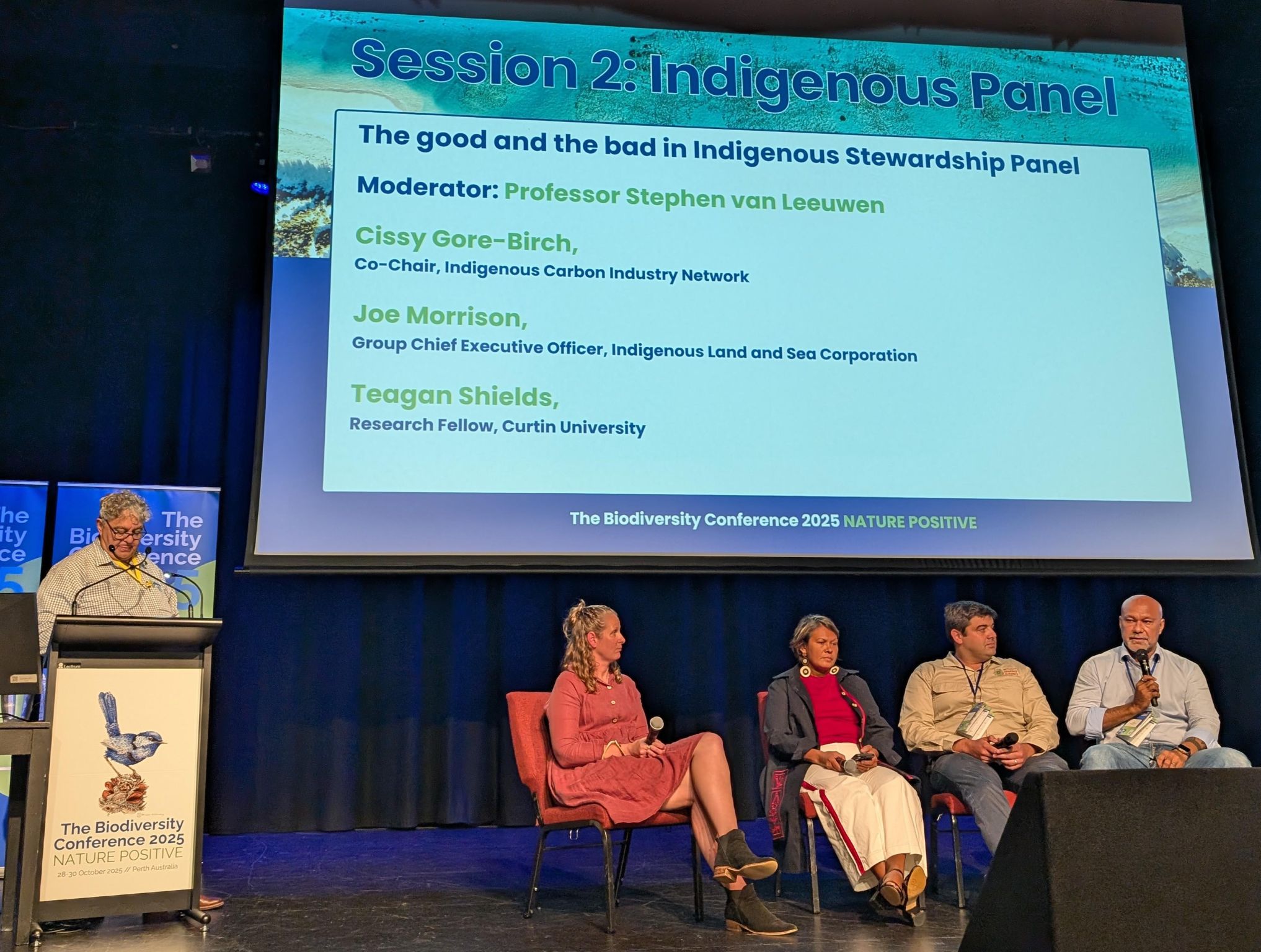
As well as delivering a keynote speech, Cissy participated in an Indigenous panel discussion titled 'The good and bad in Indigenous Stewardship', moderated by Professor Stephen van Leeuwen, BHP/Curtin Indigenous Professor in Biodiversity and Environmental Science, Curtin University, and with fellow panelists Joe Morrison, Group Chief Executive Officer, Indigenous Land and Sea Corporation and Teagan Shields (PhD), Research Fellow, Curtin University.
Extracts from her speech:
I would like to start by acknowledging the Traditional Owners of the land we are meeting on, and in particular any Noongar people in the room today. I am a Jaru/Gija woman and mother of five children from Kununurra in the north, and I am presenting here today on behalf of the Indigenous Carbon Industry Network, or ICIN as it is often referred to.
The ICIN was established in 2018 by a Steering Committee and network of around 30 Indigenous land and sea organisations that owned carbon projects, and originally hosted by Warddeken Land Management, based in West Arnhem Land. We started with a budget of $150,000 to employ a part-time Coordinator.
In 2021 members decided to register the ICIN as an independent, fully Aboriginal-owned charitable company. Its 23 Full Members, being Indigenous land and sea groups that owned a carbon project own the company and elect the Board. The network also includes nine Associate Member organisations, being Indigenous groups that are interested in the carbon industry.
The primary driver of our members projects is:
- their commitment to care for their country
- to leave behind a positive legacy for future generations, including employment opportunities on country,
- pathways for understanding and supporting old people to hand down cultural knowledge to young people,
- generating an independent source of revenue
- to sustain not only our land management programs,
- to build new ranger bases,
- to establish independent schools where education is directly led and supported by Elders,
- to support services to outstations and
- (as ICIN members Mimal Land Management Aboriginal Corporation and Warddeken Land Management are demonstrating) to establish new ecological monitoring programs led by Traditional Owners that value both Bininj and Balanda knowledge and toolboxes, not only western science.
There are also significant environmental benefits brought by these savanna fire projects. Through shifting the fire regime from predominantly late dry season fires to predominantly early dry season fires, savanna fire projects increase biodiversity, improve soil health and cause a significant reduction in greenhouse gas emissions from savanna fires. Bringing traditional knowledge together with western science has brought about some good opportunities through supporting Indigenous savanna fire management carbon projects.
The network and its members successfully advocated over many years to ensure that consent from native title holders with an Eligible Interest Holder right must be required before a carbon project can be registered. The Australian Government has now agreed to update the Carbon Farming Initiative Act to remove a loophole for carbon developers enabling ‘conditional registration’ before consent had been granted. This is an important recognition of the rights of Indigenous people to carbon and we are maintaining pressure on the government to ensure it enacts this legislative change sooner rather than later. It is good to see that in the nature repair legislation these rights are already recognised.
Learn more about the conference: biodiversity2025.com